
Semaglutide Blog: Guides, Research & Latest Insights
Explore clear, accessible articles covering all aspects of semaglutide, including how it works, potential benefits, side effects, safety, cost, comparisons, research updates, and real-world experiences. Our blog is designed for general readers who want balanced, practical information without medical jargon or exaggerated claims.
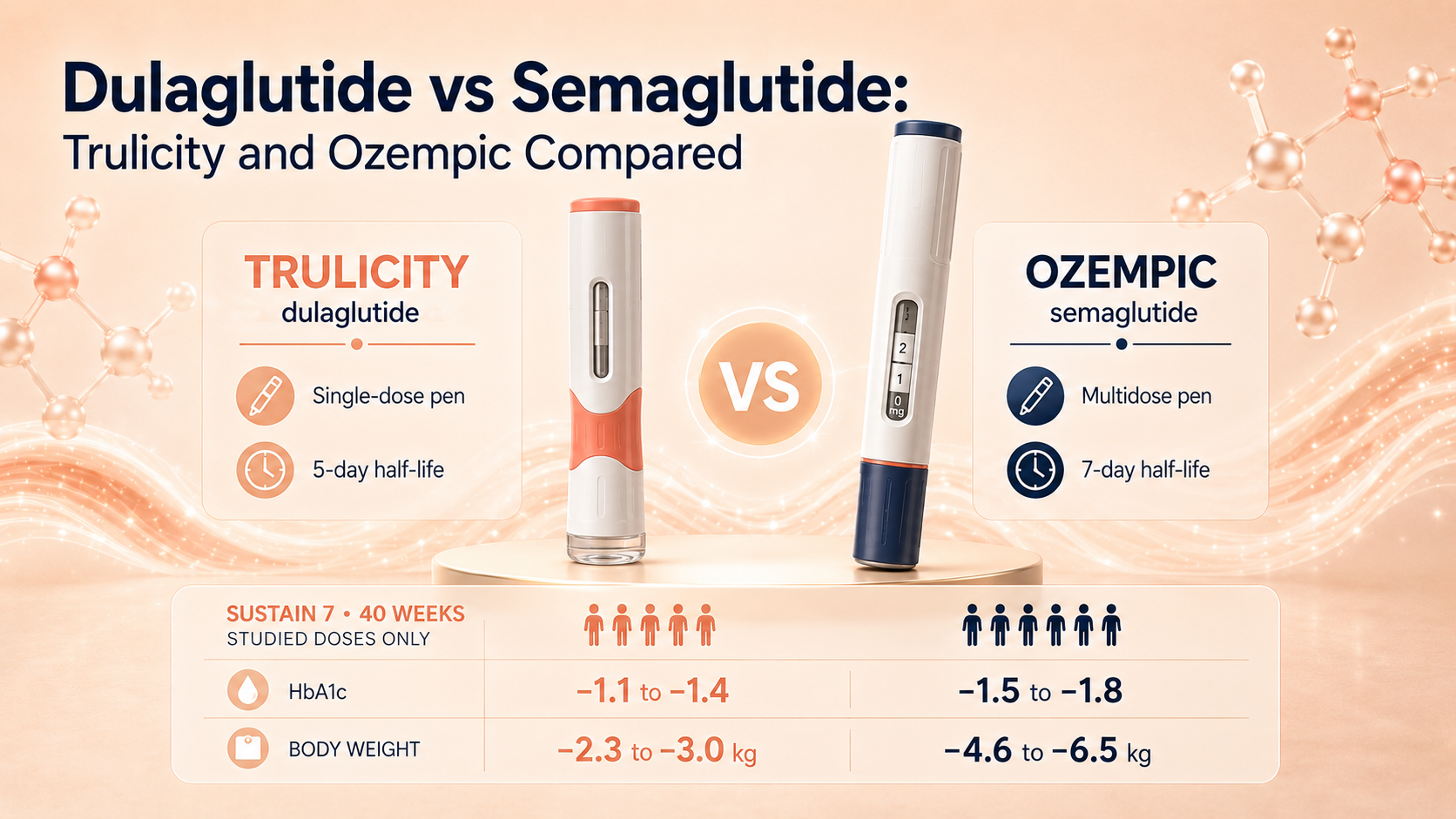
Dulaglutide vs Semaglutide: Trulicity and Ozempic Compared
Comparing dulaglutide vs semaglutide (Trulicity vs Ozempic) highlights two leading once-weekly GLP-1 receptor agonists designed to improve blood sugar control in type 2 diabetes while reducing cardiovascular risk. While sharing similar mechanisms of action and injection schedules, head-to-head studies between semaglutide vs Trulicity reveal notable differences in HbA1c reduction, weight loss capacity, and pen engineering. To determine which is better Trulicity or Ozempic for your clinical goals, here is a detailed breakdown of their efficacy, device design, and safety profiles.
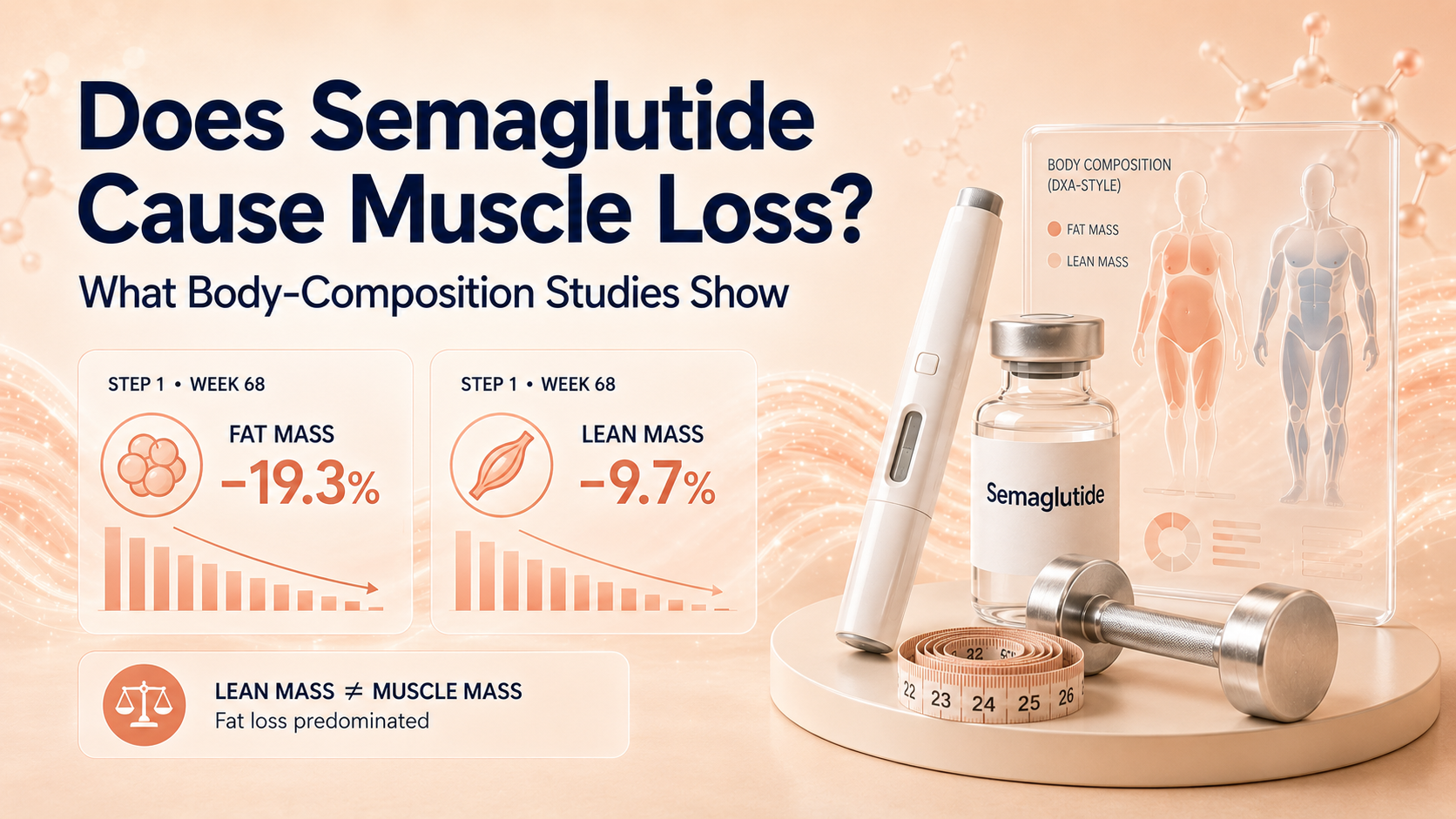
Does Semaglutide Cause Muscle Loss? What Body-Composition Studies Show
When starting a weight-loss journey, scale numbers only tell half the story. While rapid results are exciting, growing concerns around Ozempic muscle loss and Wegovy muscle loss have left many wondering if their progress is coming at the expense of functional muscle. Knowing that weight loss does not always mean fat loss alone, researchers have used advanced DXA imaging to track exactly what happens to body composition during treatment. Here is a look at what studies show about muscle and lean-mass loss and how to ensure your results prioritize fat reduction while preserving lean tissue.
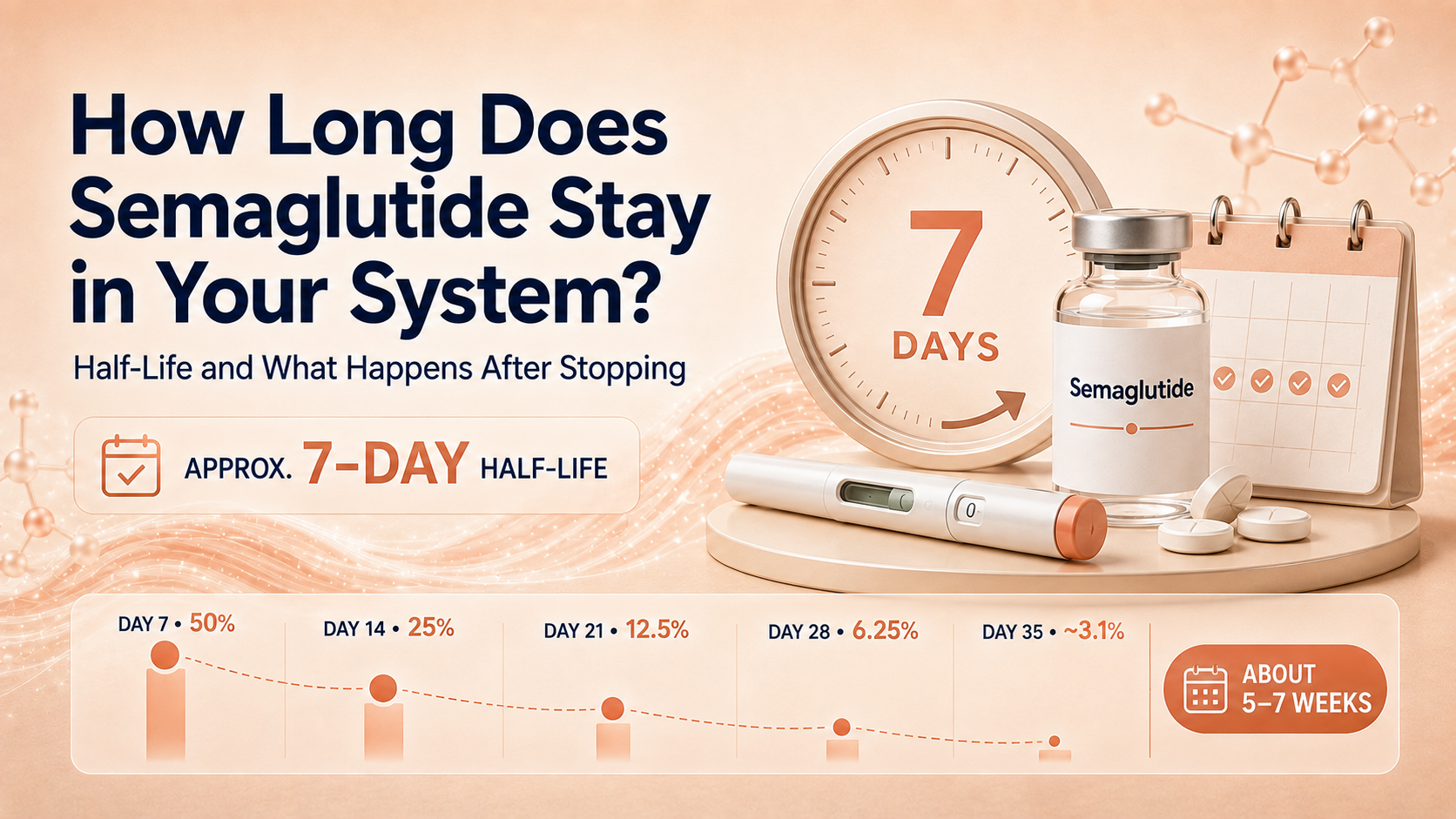
How Long Does Semaglutide Stay in Your System? Half-Life and What Happens After Stopping
With an elimination half-life of approximately one week, semaglutide remains in your system for about 5 weeks after stopping—and up to 5 to 7 weeks for Wegovy 2.4 mg. Learn what to expect during systemic clearance.
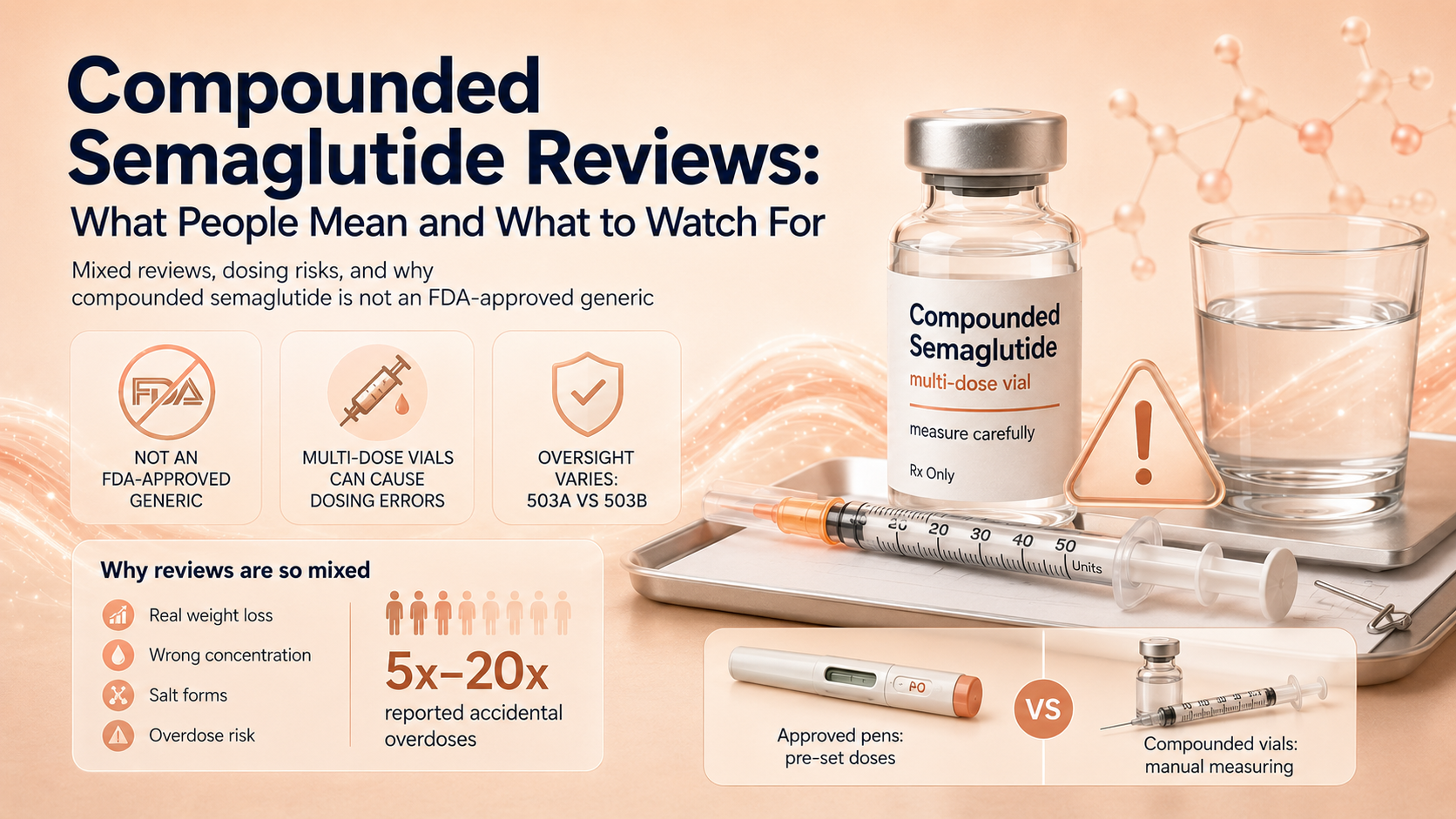
Compounded Semaglutide Reviews: What People Mean and What to Watch For
Scroll through compounded semaglutide reviews and you’ll find glowing weight-loss success stories right next to harrowing accounts of accidental overdoses that ended in the ER. The gap between those experiences isn’t just about how different bodies respond—it’s about what “compounded” can actually mean, from sterile, professionally dosed injections to degraded salt forms patients measure themselves at home. Understanding which one you’re reading about is the first step to making sense of the mixed reviews.
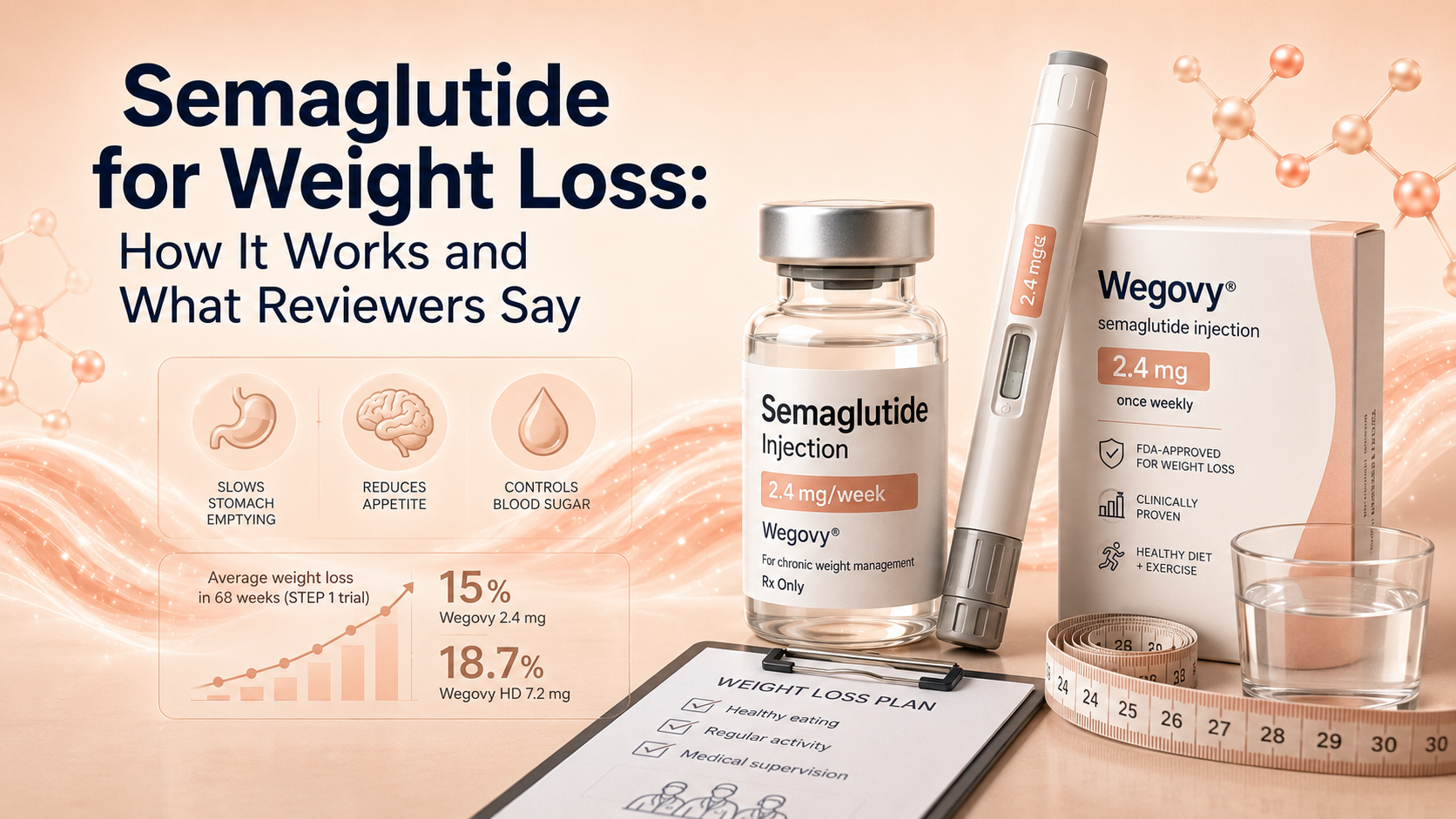
Semaglutide for Weight Loss: How It Works and What Reviewers Say
Search “semaglutide for weight loss” and you’ll find a storm of dramatic before-and-afters and horror stories—but the clinical truth is far more measured and informative. Only Wegovy holds FDA approval specifically for weight loss, and in large trials people on it lost an average of about 15% of their body weight, though the drug is a tool, not a cure.

Oral Semaglutide vs Tablets vs Pills: What’s the Difference?
Oral semaglutide, semaglutide tablet, semaglutide pill — they all refer to the same solid dose you swallow. The real divide isn't in the name but in the brand, formulation, and whether it's approved to treat diabetes or obesity. One tablet has now become the focus of a far louder weight-loss conversation than the diabetes care it originally entered.
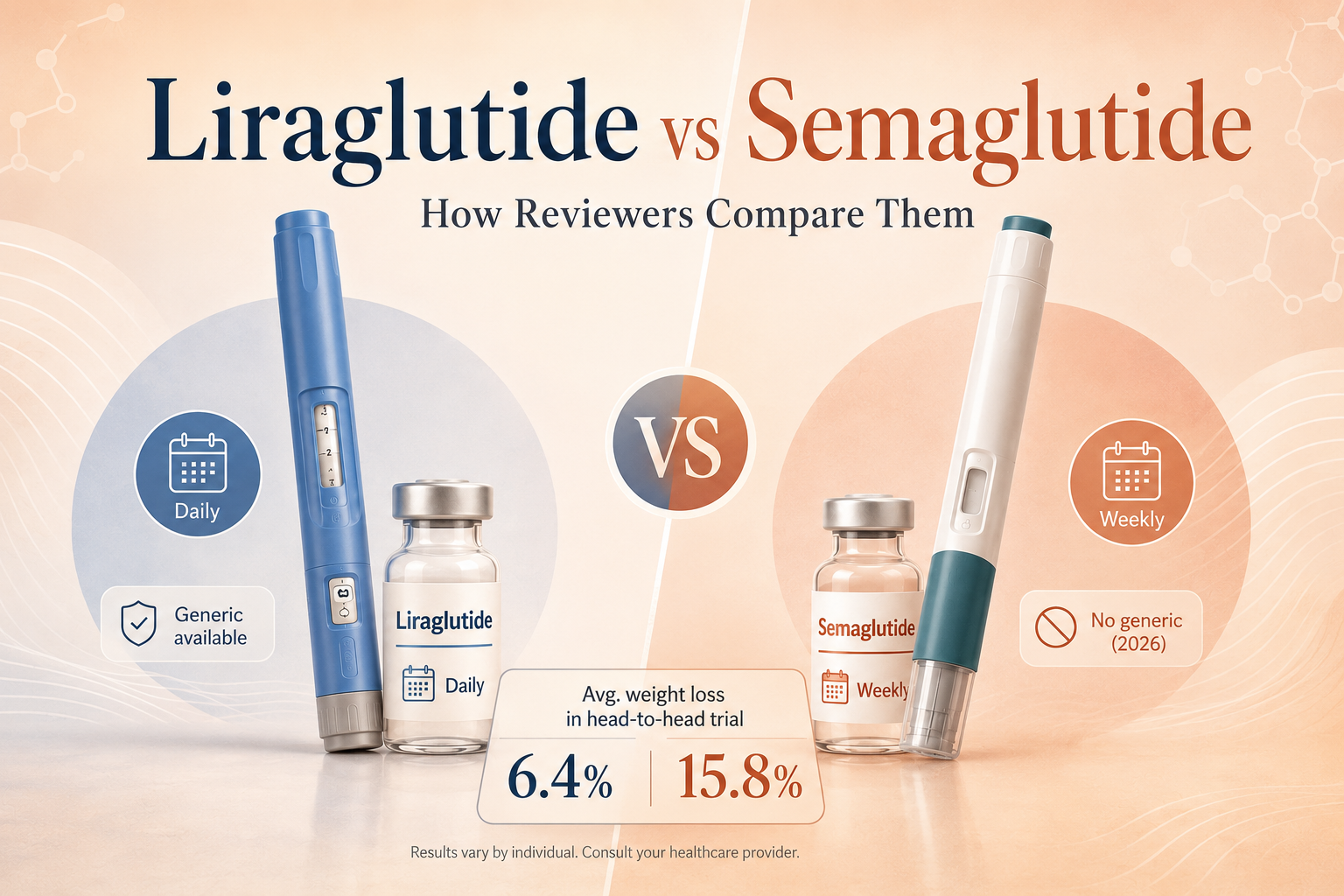
Liraglutide vs Semaglutide: 15.8% vs 6.4% Weight Loss?
If you’re wondering which injectable weight-loss drug actually works better, the numbers from a landmark head-to-head trial are eye-opening. Yet the real answer isn’t just about pounds lost—daily needles, cost, and side effects can reshape the decision completely.

Semaglutide News: Latest Updates in 2026
In 2026, the semaglutide story took a sharp turn away from social media hype and toward tangible shifts in treatment: a stronger weekly shot, two new pill options, and a GLP-1 rival that skips the rigid fasting rules. But the year also delivered a harsh reset as the FDA moved to permanently end mass compounding, Medicare opened a temporary coverage bridge, and a high-profile Alzheimer’s trial collapsed.

Buying Semaglutide Online: Reviews, Risks, and What to Know
A quick search for semaglutide online serves up a flood of tempting offers—telehealth consultations, discounted vials, and even sites that skip the prescription entirely. But the gulf between the polished marketing and what actually lands at your door can put you in a hospital; your supply chain determines whether you’re getting a rigorously tested medication or an untested gamble.

Microdosing Semaglutide Chart Explained Through Community Reviews and Feedback
A grid of clicks and doses promising the effects of semaglutide at a fraction of the prescribed amount has spread across social media, but none of these “microdosing charts” have ever been studied or approved by regulators. They’re community-built cheat sheets fueled by hope and anecdote, not by clinical evidence—and their rise raises critical questions about safety, sourcing, and what patients actually get when they follow unvalidated advice.

Retatrutide vs Semaglutide Review: What People Are Saying
A quick scan of headlines might suggest retatrutide is poised to leave semaglutide in the dust with nearly double the weight loss in trials. But that excitement is based on an investigational triple-agonist that hasn’t been approved, pitted against a well-established, FDA-approved drug. Here’s a clear look at what the science — and the internet — actually say.
