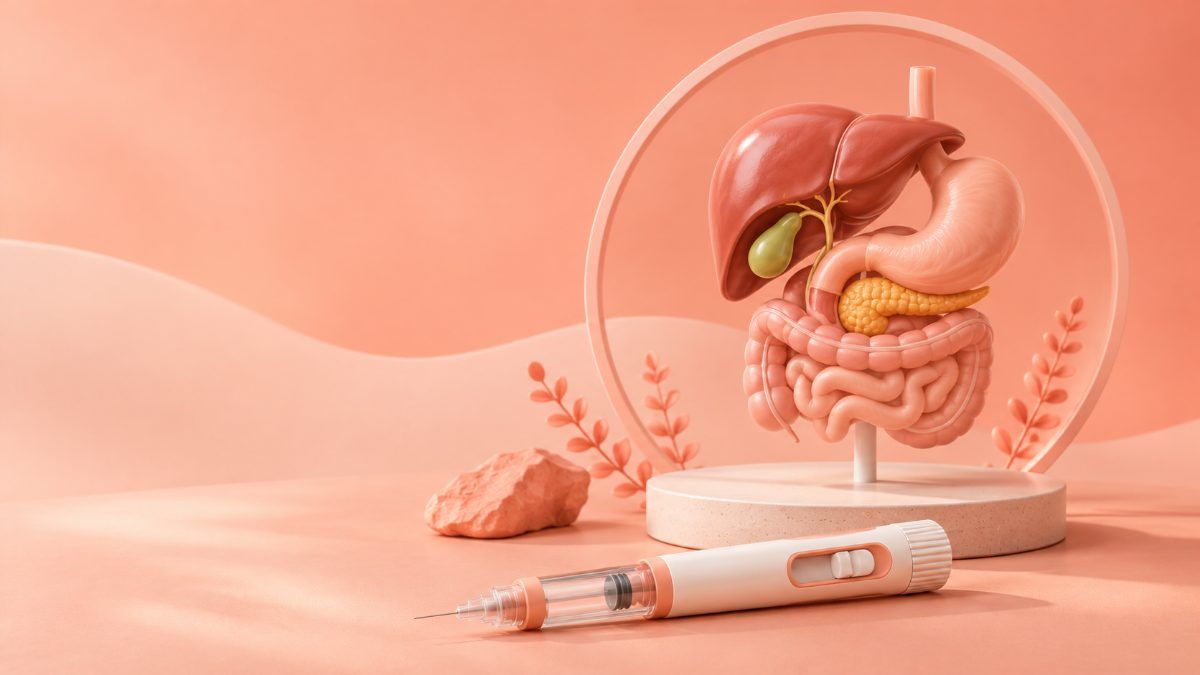
Semaglutide and Gallbladder Problems: What the Labels and Trials Show
Semaglutide raises gallstone and cholecystitis risk, though events are uncommon. Label rates for Ozempic and Wegovy, trial data, symptoms and when to get help.
Written by Dr. Diana Munteanu. Updated November 20, 2026.
Yes, semaglutide can cause gallbladder problems, mainly gallstones (cholelithiasis) and gallbladder inflammation (cholecystitis), but they are uncommon. The Wegovy label states that treatment is associated with an increased occurrence of both. In adult weight-loss trials of the Wegovy injection, gallstones were reported in 1.6% of people on semaglutide against 0.7% on placebo, and cholecystitis in 0.6% against 0.2%. Rates were higher with the Wegovy pill (2.5% against 1%) and in teenagers (3.8% against 0%). Rapid or substantial weight loss is one reason, because it changes the makeup of bile, but the label notes that gallbladder disease stayed more common on Wegovy even after accounting for how much weight people lost. A large 2022 analysis of 76 trials found that GLP-1 medicines as a group raised the relative risk of gallbladder and bile-duct disease by about 37%, with bigger increases at higher doses and in weight-loss trials. This guide brings the label and trial numbers together, explains the symptoms of a gallbladder attack and says when to get help.
Semaglutide and Gallbladder Problems: The Short Answer
- 1It is a labeled risk: the Ozempic and Wegovy labels both warn about gallstones and cholecystitis.
- 2Uncommon in absolute terms: about 1.6% of adults on the Wegovy injection had gallstones in trials, against 0.7% on placebo.
- 3Higher with the pill and in teens: 2.5% on Wegovy tablets and 3.8% in adolescents on the injection.
- 4Across GLP-1 drugs: a 76-trial meta-analysis found a 37% higher relative risk of gallbladder or bile-duct disease, mostly at higher doses and in weight-loss trials.
- 5Know the warning signs: upper right or upper stomach pain lasting hours, fever, yellow skin or eyes, dark urine or pale or clay-colored stools.
Does Semaglutide Cause Gallbladder Problems?
Semaglutide is the active ingredient in Ozempic (injection for type 2 diabetes) and Wegovy (injection and tablets for weight management), as explained in is semaglutide the same as Ozempic. Both labels carry a gallbladder warning. Section 5.9 of the Ozempic label (revised May 2026) says acute events of gallbladder disease, such as cholelithiasis or cholecystitis, have been reported. Section 5.3 of the Wegovy label is firmer: "Treatment with WEGOVY is associated with an increased occurrence of cholelithiasis and cholecystitis."
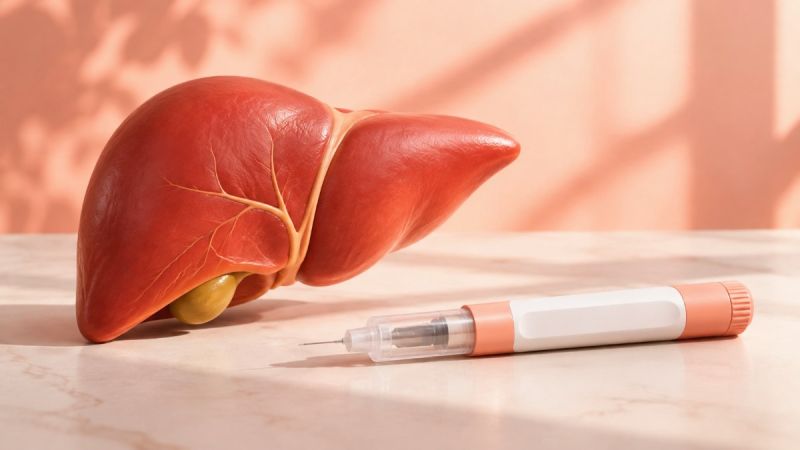
Two terms are worth knowing. Cholelithiasis means gallstones: hardened deposits that form in the gallbladder, a small pouch under the liver that stores bile. Cholecystitis means inflammation of the gallbladder, usually because a stone blocks its outlet. When a stone blocks the outlet, it can cause intense pain that needs medical care.
How Common Are Gallstones on Ozempic vs Wegovy?
The rates differ by product, dose and population. People in Wegovy trials were losing more weight than those in Ozempic's diabetes trials, which is one reason the numbers are not directly comparable. The table pulls together the figures from the FDA labels and the SELECT safety paper.
Gallbladder events with semaglutide vs placebo in labels and trials
Ozempic 0.5 mg (label)
Adults with type 2 diabetes, glycemic trials
1.5% vs 0%
No trial rate given; postmarketing reports
Ozempic 1 mg (label)
Adults with type 2 diabetes, glycemic trials
0.4% vs 0%
No trial rate given; postmarketing reports
Wegovy injection (label)
Adults, weight-management trials
1.6% vs 0.7%
0.6% vs 0.2%
Wegovy tablets (label)
Adults, weight-management trials
2.5% vs 1%
Not given in the label sections reviewed
Wegovy injection (label)
Adolescents 12 and older
3.8% vs 0%
0.8% vs 0%
SELECT, semaglutide 2.4 mg
Adults with heart disease and overweight or obesity, no diabetes
1.4% vs 1.1%
0.6% vs 0.6%
Oddly, the Ozempic 1 mg rate is lower than the 0.5 mg rate in these trials. With small numbers of events, that pattern may reflect chance rather than a true dose effect. Differences between the pill and the injection are covered in oral semaglutide vs injections, and dose steps in our semaglutide dosage chart.
What Did the SELECT and STEP 1 Trials Find?
SELECT tested semaglutide 2.4 mg in adults with established cardiovascular disease and overweight or obesity who did not have diabetes. Its safety analysis, published by Kushner and colleagues in Obesity in 2025, found gallbladder-related disorders in 2.8% of people on semaglutide against 2.3% on placebo (p=0.04). The difference was driven by gallstones (1.4% against 1.1%); cholecystitis occurred in 0.6% of both groups. SELECT is notable because it was large and long, so it gives a realistic picture of risk in people at high cardiovascular risk. Its heart results are covered in the SELECT trial.
STEP 1, published by Wilding and colleagues in the New England Journal of Medicine in 2021, tested semaglutide 2.4 mg for weight loss in adults with overweight or obesity. A secondary trial summary reports gallbladder disorders in 2.6% of people on semaglutide against 1.2% on placebo. We could not confirm that figure in the paper itself, so treat it as approximate. It points in the same direction as the Wegovy label.
What Does Research Across All GLP-1 Drugs Show?
The largest analysis we found is a 2022 meta-analysis by He and colleagues in JAMA Internal Medicine. It pooled 76 randomized trials with 103,371 patients taking any GLP-1 receptor agonist, not only semaglutide. Compared with placebo or other treatments, GLP-1 medicines raised the risk of the combined gallbladder or biliary disease outcome by 37% in relative terms. The increase was concentrated in higher-dose, longer and weight-loss trials.
He 2022 meta-analysis: relative risk of gallbladder and biliary disease with GLP-1 drugs
Any gallbladder or biliary disease
1.37 (1.23 to 1.52)
About 37% higher relative risk
Gallstones (cholelithiasis)
1.27 (1.10 to 1.47)
About 27% higher
Cholecystitis
1.36 (1.14 to 1.62)
About 36% higher
Biliary disease
1.55 (1.08 to 2.22)
About 55% higher
Higher doses
1.56 (1.36 to 1.78)
Clear increase
Lower doses
0.99 (0.73 to 1.33)
No clear increase
Longer treatment
1.40
Increase
Shorter treatment
0.79
No increase
Weight-loss trials
2.29 (1.64 to 3.18)
More than doubled
Diabetes and other trials
1.27 (1.14 to 1.43)
Smaller increase
A smaller 2025 meta-analysis by Safwan and colleagues in the Annals of Saudi Medicine looked only at semaglutide in 13 trials with 26,894 people with obesity but no diabetes. It reported that semaglutide increased gallbladder-related disorders, particularly gallstones, by more than 2.6 times (95% CI 1.40 to 4.82). The wide interval means the true size of the increase is uncertain.
Relative risks can sound alarming. Because gallbladder events are uncommon to begin with, a 37% relative increase on a low baseline still leaves most people unaffected. Trade press has also reported that semaglutide is among the top five drugs named in FDA adverse-event reports for gallstones and cholecystitis, but those are voluntary reports and cannot tell you how often problems happen.
Why Does Rapid Weight Loss Raise Gallstone Risk?
According to the NIDDK, losing weight very quickly may raise the risk of gallstones because the liver releases extra cholesterol into bile and the gallbladder may not empty properly. (This NIDDK page was last reviewed in 2017, so it predates current GLP-1 drugs, but the mechanism is general.) The Wegovy label says substantial or rapid weight loss can increase the risk of gallstones and tells prescribers to advise patients of this. It also says gallbladder disease remained more common on Wegovy than placebo after accounting for the amount of weight lost, which suggests weight loss is not the only factor. Our page on semaglutide for weight loss explains typical results, and semaglutide and muscle loss covers what that weight is made of.
Does a Higher Dose or Longer Use Raise the Risk?
Across GLP-1 drugs, yes. In the He meta-analysis, higher doses carried a relative risk of 1.56, while lower doses showed no clear increase, and longer treatment carried more risk than shorter treatment. We did not find semaglutide-specific data comparing doses, and we did not find gallbladder rates for the newer Wegovy 7.2 mg dose, so it is not possible to give a per-dose figure for semaglutide as of November 2026. The 2.4 mg trials and the teen trial show the highest rates in the table above.
What Are the Symptoms of a Gallbladder Attack on Semaglutide?
The Wegovy Medication Guide lists these symptoms of gallbladder problems: pain in your upper stomach (abdomen), fever, yellowing of your skin or eyes (jaundice) and clay-colored stools. The NIDDK describes gallbladder attacks as pain in the upper right abdomen that can last several hours and often comes after heavy meals, sometimes in the evening or at night.
Some of this overlaps with common semaglutide side effects such as nausea and indigestion, which can be confusing. As a rough guide, ordinary nausea tends to come in waves after a dose and ease over days, as covered in semaglutide nausea and how long semaglutide side effects last. Pain that is steady, severe, located under the right ribs or in the upper middle stomach, or accompanied by fever or yellowing is not typical and should be checked.
When Is Gallbladder Pain an Emergency?
The NIDDK advises seeing a doctor right away if you have any of the following, because they can signal a blocked duct or infection:
- 1Belly pain lasting several hours
- 2Nausea and vomiting with the pain
- 3Fever or chills
- 4Yellowing of the skin or the whites of the eyes
- 5Dark urine and light-colored or clay-colored stools
Can You Take Semaglutide Without a Gallbladder or After Gallstones?
We did not find text in the Ozempic or Wegovy labels that addresses people who have had their gallbladder removed or who have had gallstones before, and gallstones are not listed as a reason the drugs cannot be used. That does not settle the question either way. If you have a history of gallstones or gallbladder surgery, tell your prescriber so they can weigh it with the rest of your health history and decide how closely to watch you.
How Is Gallbladder Disease on Semaglutide Handled?
The Wegovy label says that if gallstones are suspected, gallbladder studies and appropriate clinical follow-up are indicated. Your doctor will decide which tests you need and whether semaglutide should be paused. Do not restart a paused dose on your own. How semaglutide compares with tirzepatide on side effects is in tirzepatide vs semaglutide side effects.
When to Talk to Your Doctor
- 1Upper stomach or upper right belly pain that lasts several hours or keeps coming back after meals.
- 2Fever or chills with belly pain.
- 3Yellowing of the skin or eyes, dark urine, or pale or clay-colored stools.
- 4Vomiting that does not stop or keeps you from drinking fluids.
- 5You have had gallstones or gallbladder surgery and are starting semaglutide.
- 6You are losing weight much faster than your care team expected.
What to Do Next: Questions to Ask Your Doctor
- 1Given my history, how much does semaglutide raise my gallbladder risk?
- 2Is my rate of weight loss in a range you are comfortable with?
- 3Which symptoms should make me call you, and which mean I should go to the emergency department?
- 4If I develop gallstones, would I need to stop semaglutide, and what would happen to my blood sugar or weight?
- 5Does the pill or a higher dose change my risk compared with the injection I am on now?
- 6I have had my gallbladder removed or had gallstones before: does that change how you will monitor me?
Keeping a simple log of any belly pain, when it starts, how long it lasts and what you ate before it can make that conversation much easier.
The Bottom Line
Semaglutide raises the risk of gallstones and gallbladder inflammation, and both the Ozempic and Wegovy labels say so. The absolute risk is low, about 1.6% with gallstones on the Wegovy injection against 0.7% on placebo in adult trials, but it is higher with the pill and in teens, and across GLP-1 drugs the increase is greatest at higher doses and in weight-loss treatment. Rapid weight loss is part of the explanation, not all of it. Learn the warning signs, especially pain under the right ribs lasting hours, fever and yellowing, and get prompt care if they appear.
FAQ
Yes. The Ozempic label reports gallstones in 1.5% of people on 0.5 mg and 0.4% on 1 mg in glycemic trials, against 0% on placebo, and lists cholecystitis among postmarketing reports.
The Wegovy Medication Guide lists upper stomach pain, fever, yellowing of the skin or eyes, and clay-colored stools. Pain lasting several hours, vomiting, chills or dark urine also need prompt care.
The labels do not address this, and gallbladder removal is not listed as a reason not to use semaglutide. Tell your prescriber about the surgery so they can decide how to monitor you.
The Wegovy label reports gallstones in 2.5% of adults on Wegovy tablets against 1% on placebo, a higher rate than the 1.6% seen with the injection.
The Wegovy label and the NIDDK say rapid or substantial weight loss can raise gallstone risk, but neither gives an exact rate. Ask your doctor what pace is right for you.
No. In label and trial data, gallstones were reported in fewer than 1 to about 4 in 100 people on semaglutide, depending on the product and population, against 0 to about 1 in 100 on placebo.
Sources
- 1Novo Nordisk. OZEMPIC (semaglutide) injection, prescribing information (revised 05/2026), U.S. Food and Drug Administration, 2026
- 2Novo Nordisk. WEGOVY (semaglutide) injection and tablets, prescribing information (revised 05/2026), U.S. Food and Drug Administration, 2026
- 3Kushner RF et al. Safety analysis of semaglutide 2.4 mg in the SELECT trial, Obesity, 2025
- 4Wilding JPH et al. STEP 1 trial of once-weekly semaglutide 2.4 mg in adults with overweight or obesity, New England Journal of Medicine, 2021
- 5He L et al. Meta-analysis of GLP-1 receptor agonist use and gallbladder and biliary disease, JAMA Internal Medicine, 2022
- 6Safwan M et al. Meta-analysis of semaglutide and gallbladder-related disorders in people with obesity without diabetes, Annals of Saudi Medicine, 2025
- 7NIDDK. Gallstones, National Institutes of Health, reviewed 2017
- 8Wegovy prescribing information and Medication Guide (mirror, revised 6/2026), Drugs.com, 2026
- 9Trade-press report on gallbladder complications with GLP-1 receptor agonists, Pharmacy Times, 2026
This article is general information based on FDA labels, published trials and NIH material, and it is not a substitute for advice from a doctor. Ozempic and Wegovy are made by Novo Nordisk.

Dr. Diana Munteanu
Author
Comments (0)
Be the first to comment on this article.
More articles