

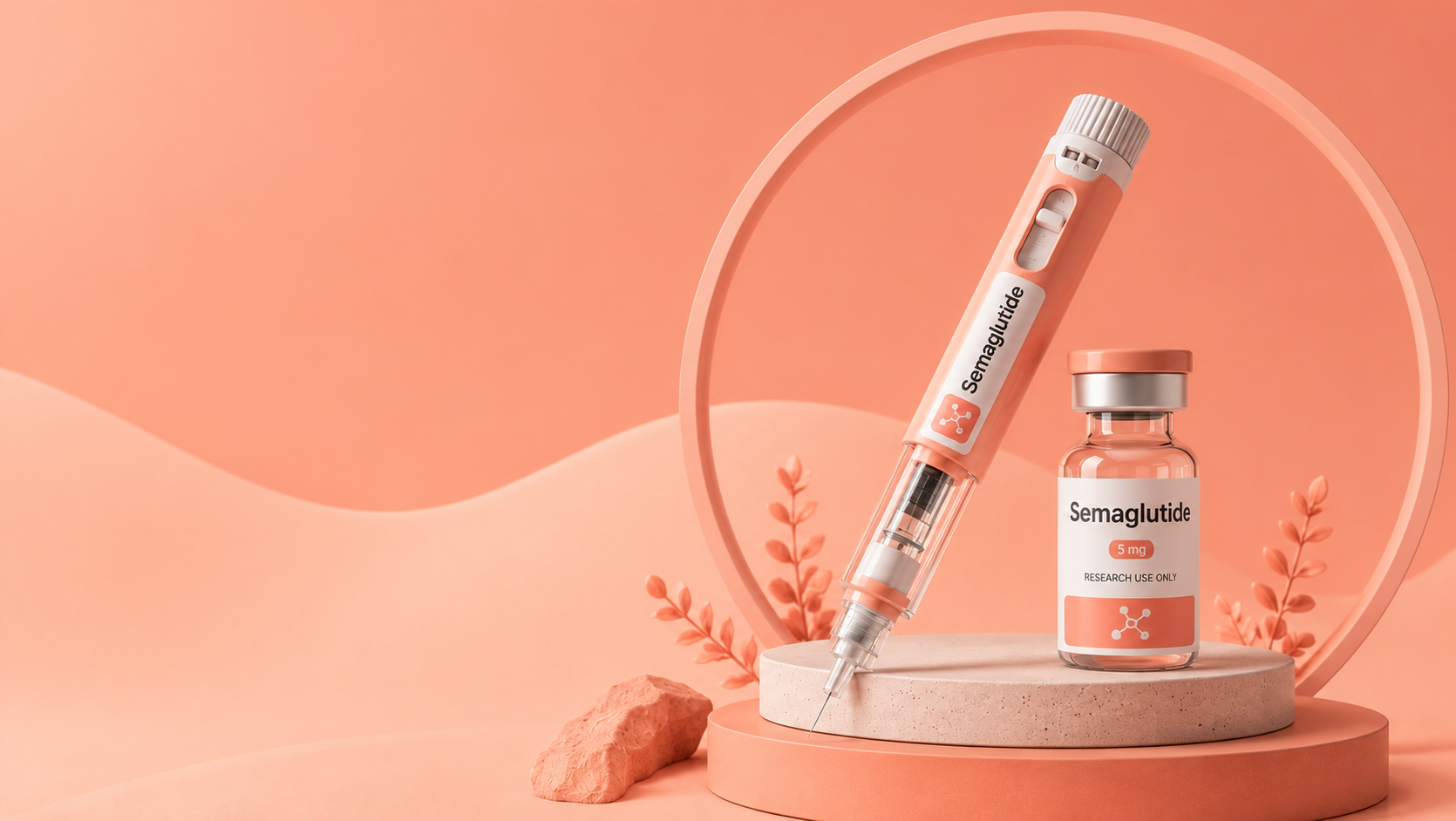
Overview
Mistaking semaglutide for a weight-loss fad or confusing it with other drugs can lead to expensive errors. It’s a single, well-studied molecule — the active ingredient in Ozempic and Wegovy — that mimics a natural gut hormone to control appetite and blood sugar. Understanding the real clinical data, not just social media claims, is what separates a smart health choice from a gamble.
Semaglutide.Overview
Semaglutide is not a category — it’s a single synthetic molecule. It’s the drug inside Ozempic, Wegovy, and Rybelsus (discontinued in the U.S. in 2026 but still sold elsewhere). It’s not tirzepatide, and it’s not a supplement. Separating the molecule from the marketing is the difference between a clear‑headed decision and a costly mistake.
Quick Answer
Semaglutide is a prescription medication that mimics the natural gut hormone GLP‑1 (glucagon‑like peptide‑1) to control blood sugar and appetite.
In large randomized trials, the standard 2.4 mg Wegovy injection produced a mean weight loss of 14.9%. A higher 7.2 mg dose reached 18.7% under the treatment‑policy estimand, which accounts for dropouts. Oral Wegovy (25 mg) achieved 13.6% mean weight loss, with nearly 30% of users losing 20% or more.
Every form requires a slow, doctor‑supervised dose ramp; skipping steps risks severe nausea or worse. Compounded semaglutide products are not FDA‑approved, and the FDA is tightening rules on mass compounding.
This article is for general education only and does not replace medical advice from a licensed healthcare professional.
How Semaglutide Works in the Body
Semaglutide is about 94% identical to GLP‑1, the hormone your gut releases after a meal. It activates GLP‑1 receptors in three key places:
- 1Pancreas: triggers insulin release when blood sugar is high and suppresses glucagon, a hormone that pushes glucose up.
- 2Brain appetite centers: lowers hunger and amplifies fullness.
- 3Stomach: slows how quickly food leaves, keeping you fuller longer.
Designed to resist rapid breakdown, it binds to albumin — a major blood protein — giving it a week‑long half‑life. That’s why one injection can influence appetite for an entire week.
Why the Brand, Dose, and Source Change Everything
The active ingredient is the same across brands, but approved uses and doses differ. Ozempic (injectable and, since May 2026, oral tablets) is indicated for type 2 diabetes and cardiovascular risk reduction. Wegovy (injection and oral tablets) is approved specifically for obesity and overweight with weight‑related conditions. The older oral tablet for diabetes, Rybelsus, was phased out of the U.S. market in 2026.
The FDA‑approved Wegovy titration gradually raises the dose: 0.25 mg weekly for the first month, then 0.5 mg, 1.0 mg, 1.7 mg, and finally the full 2.4 mg maintenance dose. Each step lasts at least four weeks. Every increase must be prescribed by a doctor after evaluating how you respond. Skipping steps or starting higher raises the risk of severe vomiting, dehydration, and pancreatitis. The FDA has flagged hospitalizations linked to dosing errors with compounded products.
During the shortage, compounding became common, but the FDA declared the shortage resolved in February 2025. Since then, mass compounding of copies of approved semaglutide has been effectively illegal. As of July 2026, the FDA enforces restrictions on “essentially copies,” and a proposed rule aims to remove semaglutide from bulk compounding lists entirely. Some compounded products use salt forms not found in the approved drug. Legitimate semaglutide requires a prescription from a regulated pharmacy — never from an unlicensed seller. Compounding is now limited to rare, patient‑specific needs where the approved product cannot be used.
What Human Trials Actually Show — vs. What You See Online
The weight‑loss data come from large Phase 3 randomized controlled trials, not anecdotes:
- 1STEP 1 (Wegovy 2.4 mg injection): 1,961 adults, 68 weeks. Mean weight loss of 14.9% vs. 2.4% for placebo. 86.4% of people lost at least 5% of their body weight.
- 2STEP UP (Wegovy HD 7.2 mg): Using the same treatment‑policy estimand, mean weight loss was 18.7%. A per‑protocol analysis, which assumes no dropouts, put the mean at 20.7% and nearly one in three participants lost 25% or more.
- 3OASIS 4 (oral Wegovy 25 mg): 13.6% mean weight loss, with nearly 30% achieving a 20% or greater reduction.
When people compare semaglutide to tirzepatide — a dual GIP/GLP‑1 agonist, not the same drug — the landmark SURMOUNT‑5 trial is clear: after 72 weeks, tirzepatide delivered 20.2% weight loss versus 13.7% for semaglutide. That doesn’t mean semaglutide is ineffective; it means the molecules are different.
“Ozempic face” is a social‑media term for facial volume loss that comes with rapid weight loss itself, not a direct drug effect. Any sizable, fast loss can produce the same gaunt appearance.
Microdosing semaglutide — taking far less than the approved starting dose — has exploded online, but no clinical trial supports it. No evidence‑based microdosing chart exists. One study is testing a microdosed GLP‑1 for longevity, but results aren’t published yet. Any dosing chart you see online is guesswork.
What Real‑World Reports Add — and Don’t Add
Online forums are filled with personal semaglutide and tirzepatide comparisons. Large observational studies and insurance claims data can separate signal from noise. They consistently show that, outside trials, appetite suppression often kicks in within the first week, nausea peaks during early dose increases then fades, and weight loss plateaus are common after 6–12 months — exactly what clinical trials report. These patterns are not proof that one drug is “better” for everyone, and no single Reddit thread replaces a conversation with a doctor. But the broad real‑world trend matches the controlled data: both drugs work, tirzepatide typically yields greater loss, and individual responses vary widely.
Side Effects and Safety: What to Discuss with a Doctor
The most common side effects — nausea, vomiting, diarrhea, constipation, abdominal pain — mirror the drug’s gut‑slowing action. They usually peak during dose increases and often ease over time. The FDA label carries a boxed warning: semaglutide caused thyroid C‑cell tumors in rodents; whether that translates to humans is unknown, which is why the drug is contraindicated in anyone with a personal or family history of medullary thyroid carcinoma or Multiple Endocrine Neoplasia syndrome type 2 (MEN 2).
Other serious risks include acute pancreatitis, gallbladder disease, kidney injury, severe allergic reactions, and — added to the FDA label in October 2025 — severe gastrointestinal adverse events. Seek immediate medical attention if you experience severe abdominal pain, vomiting that won’t stop, or signs of dehydration.
A clinician should evaluate your medical history before starting and monitor for persistent abdominal pain, vision changes (diabetic retinopathy can worsen), or dehydration signs throughout treatment.
What the Internet Gets Wrong
Treating “Ozempic” as a catch‑all for every weight‑loss injection is a common mistake. Ozempic is one brand of semaglutide. Mounjaro and Zepbound are tirzepatide, a different molecule. Mixing them up warps comparisons and safety expectations.
Assuming compounded semaglutide is just a generic misses a crucial point: there is no FDA‑approved generic semaglutide. Compounded products aren’t tested for purity or potency by the FDA, and some contain salt forms not found in the branded drugs.
Celebrity before‑and‑after photos can’t tell you which drug (if any) was used, at what dose, or with what else. And trusting microdosing charts found online is risky — no randomized trial has validated any microdosing regimen, and the FDA specifically warns about dosing errors from compounded products.
Finally, positioning semaglutide as an anti‑aging or longevity hack has no approval or published trial behind it.
What This Means for Your Decision
Semaglutide is backed by solid human trials with clear numbers. But whether it helps you or lands you in trouble depends on the brand, prescriber, and who made the liquid in the pen. It’s not a supplement. It’s not interchangeable with tirzepatide. And the compounded product you saw in a telehealth ad isn’t a generic — it’s a gamble the FDA is moving to shut down. The conversation starts with a doctor who actually examines you, not a chat window, and uses the real, approved product that fits your situation.
Frequently Asked Questions
Is semaglutide available without a prescription? No. All forms require a prescription. You won’t find legitimate, FDA‑approved semaglutide on a store shelf or from an online seller without a consultation.
How is the dose determined for weight loss? The manufacturer’s standard Wegovy schedule starts at 0.25 mg weekly and rises in steps — 0.5 mg, 1.0 mg, 1.7 mg, then 2.4 mg — each lasting at least four weeks. The exact timing and any adjustments must be determined by a doctor based on your response and side effects, never from an online chart.
How does semaglutide compare to tirzepatide? In the head‑to‑head SURMOUNT‑5 trial, tirzepatide produced 20.2% mean weight loss vs. 13.7% for semaglutide over 72 weeks. Tirzepatide targets both GIP and GLP‑1 receptors, which likely explains the difference.
What are the most common side effects? Nausea, vomiting, diarrhea, constipation, and abdominal pain are most common, especially during dose increases. Serious risks include pancreatitis, gallbladder problems, and a boxed warning about thyroid C‑cell tumors.
Is compounded semaglutide safe? Compounded semaglutide is not FDA‑approved. The FDA has documented dosing errors and hospitalizations, and mass compounding is heavily restricted since the shortage ended. Some products use salt forms that differ from the approved drug.
What’s “Ozempic face,” and will it go away? It’s a social‑media term for facial volume loss that comes with rapid weight loss, not a direct drug side effect. Whether it reverses typically depends on whether weight is regained.
Does microdosing semaglutide work? No human trial supports any microdosing protocol for weight loss or metabolic health. The only registered study on a microdosed GLP‑1 for longevity hasn’t published results, and self‑directed low dosing carries unknown risks.
