
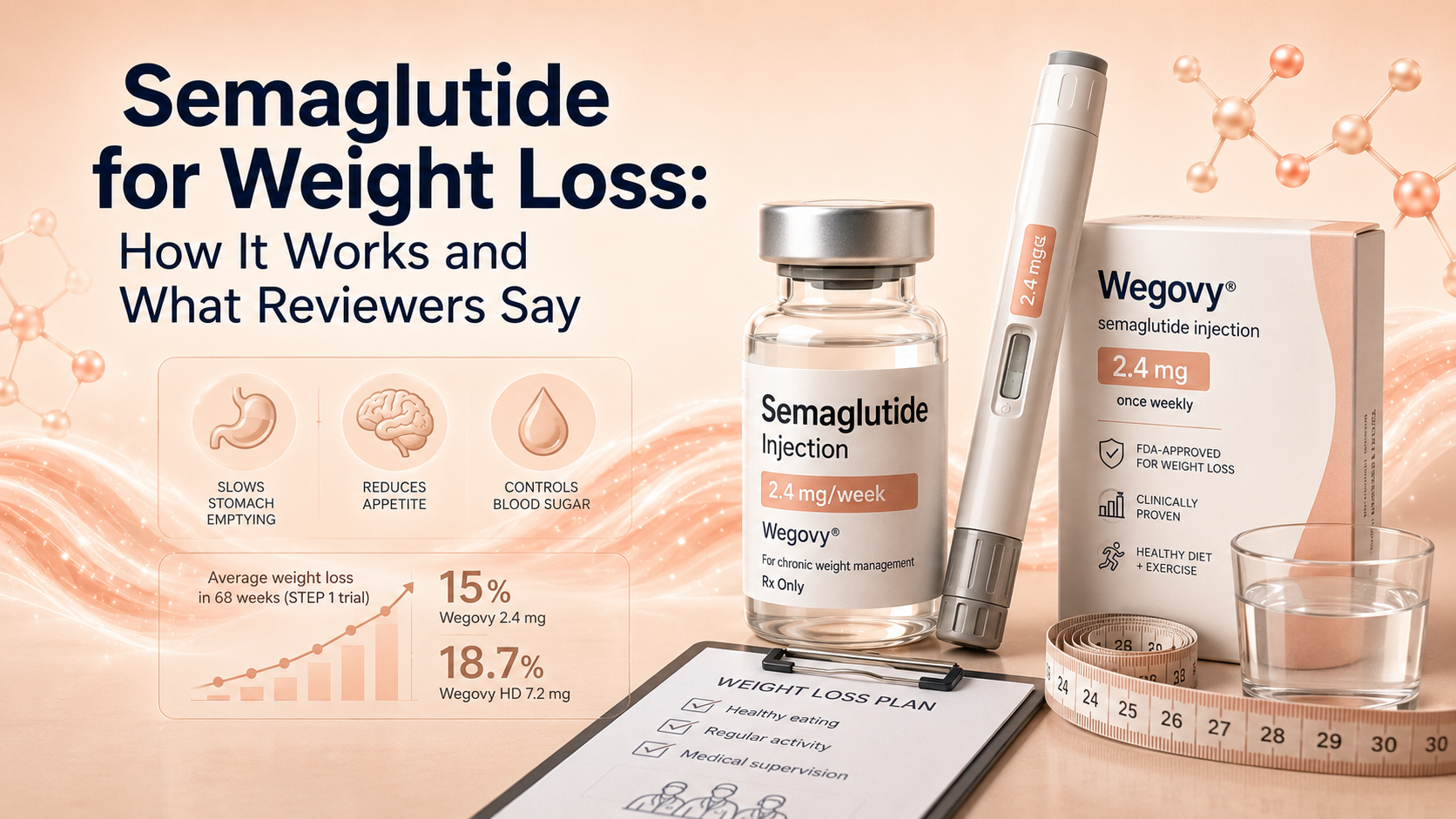
Semaglutide for Weight Loss: How It Works and What Reviewers Say
Search “semaglutide for weight loss” and you’ll find a storm of dramatic before-and-afters and horror stories—but the clinical truth is far more measured and informative. Only Wegovy holds FDA approval specifically for weight loss, and in large trials people on it lost an average of about 15% of their body weight, though the drug is a tool, not a cure.
Search “semaglutide for weight loss” and you’re caught between two extremes: glossy before‑and‑after photos on one side, and panic over “Ozempic face” and crippling nausea on the other. The real picture—drawn from trial data, regulatory filings, and what actually happens when people use this drug inside a genuine medical plan—is less sensational, and far more useful.
Quick Answer
Semaglutide is a weekly injection (or daily pill) that mimics the gut hormone GLP‑1. It cuts appetite, slows stomach emptying, and helps control blood sugar. But only Wegovy—as a weekly injection or a daily oral pill—holds FDA approval specifically for chronic weight management. In large trials, people on semaglutide 2.4 mg along with a lower‑calorie diet and increased activity lost an average of about 15 % of their body weight over 68 weeks. A higher‑dose version—Wegovy HD (7.2 mg, approved March 2026)—pushed that average to roughly 18.7 % in the primary analysis (an adherent‑only analysis showed 20.7 %).
Real‑world reports mirror the studies: meaningful weight loss is common, but gastrointestinal side effects—nausea, diarrhea, constipation—are frequent, especially during the slow dose ramp‑up. The medicine is a tool, not a cure. And what gets sold online as “generic” or compounded semaglutide is not the FDA‑reviewed product.
This article is for general education only and does not replace medical advice from a licensed healthcare professional.
How Does Semaglutide Work?
Semaglutide is a long‑acting GLP‑1 receptor agonist—a synthetic version of glucagon‑like peptide‑1 that stays active for about a week. It works in three places:
- 1Pancreas: triggers insulin release only when blood sugar is high, and dials down glucagon.
- 2Stomach: slows gastric emptying, so food sits longer and you feel full sooner.
- 3Brain (hypothalamus): directly dampens hunger signals and cravings, and makes a meal feel more satisfying.
That three‑pronged effect explains both the weight loss and the most common side effects. Nausea, vomiting, and diarrhea come largely from the slower stomach emptying, especially in the early weeks while the body adapts (Mayo Clinic).
The Weight‑Loss Approval Is Wegovy — Not Ozempic
Semaglutide is the active ingredient, but it appears under different FDA‑approved brands for different purposes:
| Brand | Approved Indication(s) | Maximum Dose | |-------|------------------------|--------------| | Ozempic (injection) | Type 2 diabetes, cardiovascular risk reduction in T2D | 2.0 mg/week | | Rybelsus (daily pill) | Type 2 diabetes | 14 mg/day | | Wegovy (injection) | Chronic weight management (2021); cardiovascular risk reduction | 2.4 mg/week (standard) | | Wegovy HD (injection) | Chronic weight management (2026) | 7.2 mg/week | | Wegovy pill (daily oral) | Chronic weight management | 25 mg/day |
Only Wegovy—any form—is FDA‑cleared specifically for weight loss. Ozempic and Rybelsus are diabetes treatments. Prescribing Ozempic off‑label for weight happens often, but the two products aren’t interchangeable: they use different dose‑escalation paths, and the weight‑loss clinical trials were built entirely around Wegovy doses. When you read about “semaglutide for weight loss,” the solid evidence comes from that Wegovy program (Novo Nordisk Wegovy approval press release, June 2021).
How Dosing Is Structured — and Why It Can’t Be Rushed
The standard Wegovy injection titration moves from 0.25 mg once a week through 0.5 mg, 1.0 mg, 1.7 mg, and finally the 2.4 mg maintenance dose—each step lasting four weeks. That seven‑month ramp is deliberate: it lets your body adapt and sharply cuts the risk of severe nausea or vomiting. Skip steps or follow a schedule you found online, and you risk intense gastrointestinal distress that makes people quit early. This process must be managed by a prescribing clinician—not a chart copied from the internet.
Wegovy HD (7.2 mg) is meant for adults who have already tolerated the standard 2.4 mg dose for at least four weeks and still need further weight reduction. It is not a starting dose.
The daily oral Wegovy pill has its own slow climb: 1.5 mg/day for days 1‑30, then 4 mg (days 31‑60), 9 mg (days 61‑90), and finally 25 mg/day. Like the injection, this schedule reduces early GI side effects and requires a doctor’s prescription and monitoring.
Tirzepatide vs. Semaglutide: Head‑to‑Head Data
Tirzepatide (Zepbound) hits two gut‑hormone receptors—GIP and GLP‑1—not just one.
The only direct, randomized, head‑to‑head trial—SURMOUNT‑5, 751 adults with obesity but without diabetes—compared tirzepatide to semaglutide 2.4 mg (Wegovy standard dose). At 72 weeks:
- 1Tirzepatide produced a mean weight loss of 20.2 %
- 2Semaglutide produced 13.7 %
- 3Relative weight loss with tirzepatide was 47 % greater.
All differences were statistically significant (NEJM, 2025).
When Wegovy HD (7.2 mg semaglutide) was approved in March 2026, it carried new data from its pivotal STEP UP trial. The primary ITT (intention‑to‑treat) analysis—the most conservative read—showed a mean weight loss of 18.7 %. A supplementary analysis of those who stuck perfectly to the protocol showed 20.7 %, but that figure isn’t directly comparable to the 20.2 % ITT result from SURMOUNT‑5 because the two trials used different statistical estimands. Still, the 18.7 % result shows that the right dose of semaglutide can produce weight losses in the same neighborhood as tirzepatide’s strongest data. The gap has narrowed, but tirzepatide remains statistically ahead in its own trial.
What Social Media Usually Leaves Out
“Ozempic face” is not a medical diagnosis
The term is a social‑media label for the hollowed cheeks, loose facial skin, and gaunt look that can follow rapid, large‑magnitude weight loss—from any cause (Cleveland Clinic). It reflects the loss of facial fat, not a direct drug effect on skin or collagen. Calling it a unique reaction to semaglutide is misleading.
Compounded semaglutide is not an FDA‑reviewed product
Search for “semaglutide near me” or “semaglutide injections near me” and you’ll often find clinics, med spas, and online platforms selling compounded versions. These preparations haven’t passed through the FDA’s review for safety, effectiveness, or quality. Once semaglutide left the agency’s drug‑shortage list in February 2025, the legal pathway for most compounding narrowed sharply. In early 2026 the FDA proposed permanently excluding semaglutide from the bulk‑compounding list, and safety alerts have repeatedly flagged dosing errors—patients injecting five to twenty times the intended amount—as well as contaminated batches (Stanford Medicine, July 2026). Some compounders sell “semaglutide sodium” or “semaglutide acetate,” salt forms never tested in a clinical trial and not the active ingredient in Wegovy or Ozempic.
The only way to get the medicine that was actually studied in the STEP and SURMOUNT trials is via a prescription for the branded product. Any “semaglutide” sold without a prescription or as a so‑called generic injectable is an unapproved product with substantial unknown risk.
The medicine works alongside — not instead of — lifestyle changes
Every major trial combined the drug with a reduced‑calorie diet and increased physical activity. The 15 % weight‑loss outcomes didn’t happen in a vacuum. Anecdotes that claim “I changed nothing and the weight fell off” set unrealistic expectations and don’t match the conditions under which the drug was studied.
What Reviewers and Patients Actually Report
Real‑world accounts echo the trial side‑effect patterns but add texture. Nausea often peaks two to three days after the weekly injection and improves if people avoid fatty meals and eat small, frequent portions. Many users describe a surprising quieting of “food noise”—the constant internal chatter about food that once made dieting feel like a battle. For some, that relief alone is transformative; they can leave half a meal uneaten without effort.
The most frustrated reviewers tend to be those who stopped abruptly. Hunger signals often return forcefully, and weight regain is common—a reminder that the drug treats, rather than cures, the underlying appetite dysregulation. Satisfaction is highest when expectations stay tethered to study averages (around 15 % body weight lost over a year) rather than viral extremes. For a broader range of experiences, see the semaglutide reviews page.
Questions a Doctor Should Discuss Before Prescribing
Semaglutide isn’t a lifestyle supplement. Before you start, go through this checklist with your prescriber:
- 1Thyroid cancer history: The drug carries a boxed warning about thyroid C‑cell tumors seen in rodent studies (relevance in humans is uncertain). It should not be used if you or a close relative has had medullary thyroid carcinoma or MEN 2.
- 2Gallbladder and pancreas risks: Gallstones and pancreatitis are uncommon but serious. Severe, persistent abdominal pain that spreads to your back, or vomiting that won’t stop, can signal pancreatitis or a gallbladder emergency—get urgent medical help immediately.
- 3Other medications: Slowed stomach emptying can change how other oral drugs are absorbed.
- 4Realistic timeline: Expect gradual dose escalation and possible temporary GI side effects. Maximum weight loss typically occurs around 60 – 68 weeks.
- 5Long‑term plan: Weight regain after stopping is common; discuss a sustainable strategy, not just an initial course.
If a provider offers an injection without a detailed medical history, doesn’t discuss side effects, or promotes a “generic” or compounded product as equivalent, treat that as a warning sign. (See also semaglutide side effects and overdose risks.)
The Verdict on Semaglutide for Weight Loss
Wegovy is among the most heavily studied obesity drugs on the market. With diet and exercise, the standard dose yields roughly 15 % weight loss; the high‑dose version approved in 2026 pushes that above 18 % in primary analyses (20.7 % in adherent‑only data). Real‑world reviews confirm that meaningful weight loss comes with temporary—usually manageable—GI side effects. This is a chronic‑management tool, not a quick fix. If you’re considering it, ground the decision in clinical data and a careful talk with your provider—not in a glossy before‑and‑after photo.
FAQ
Yes, but only under the brand name Wegovy (weekly injection or daily oral pill). Ozempic and Rybelsus are approved only for type 2 diabetes, though they are often prescribed off‑label.
Meaningful loss often starts during the dose‑titration period, but the largest declines come after you reach the full maintenance dose. In the STEP 1 trial, participants lost an average of about 15 % by week 68, with a steady drop continuing through the second half of the study.
Semaglutide activates one gut‑hormone receptor (GLP‑1); tirzepatide activates two (GIP and GLP‑1). In a head‑to‑head trial, tirzepatide produced greater weight loss than semaglutide 2.4 mg (20.2 % vs. 13.7 %). Wegovy HD (7.2 mg semaglutide) later showed an ITT mean of 18.7 % in its own trial, narrowing the gap, but no direct comparison exists.
Yes. You need a prescription from a licensed healthcare provider dispensed at a state‑licensed pharmacy. Legitimate semaglutide is prescription‑only. Online sellers offering “generic” or compounded semaglutide are selling unapproved products with no verified safety or quality oversight.
Nausea, diarrhea, vomiting, and constipation. In clinical trials, about 44 % of users reported nausea, but most cases were mild to moderate and improved over time.
Dr. Diana Munteanu
Comments (0)
Be the first to comment on this article.
